Seat three · the joint in the middle, where the extra board goes
The Extra Leaf: Making Room for Something You Have Never Done
An extending table has a seam down its middle. Pull the two halves apart and a loose board drops into the gap. We call it the leaf, and most owners use it twice a year.
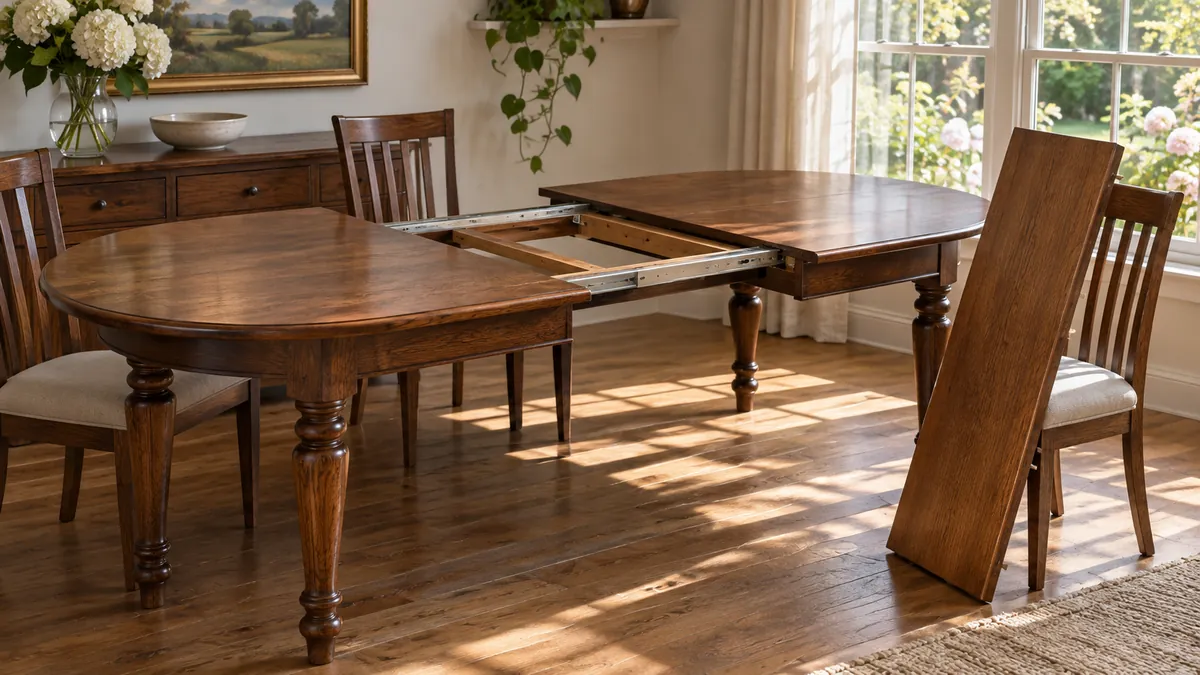
The board in the closet
Every extending table we sell leaves the factory with its leaf wrapped in cardboard, and in a good number of homes that is where it stays. It goes into a closet and comes out at Christmas. People tell us the table is perfectly fine without it, and they are right. It is also true that a table only ever used at its shortest length has never shown you what it can do.
We think about the leaf when customers in their later decades tell us they have stopped starting things. They have the habits that work and the hobbies they already know, and the idea of learning something from the beginning sounds tiring, or a little embarrassing. That is the closet talking.
Why new and slightly hard
There is a growing body of research on learning in later adulthood, and a theme that comes up often is that activities which are both unfamiliar and demanding seem to recruit attention differently from the routines a person already knows by heart. Playing the same card game for the hundredth time is pleasant. Learning to read music, to speak a little Italian, to cut a dovetail joint by hand, makes you hold several new rules in mind at once and correct yourself as you go. Some studies have followed people taking up a new skill for a few months and reported improvements in measures of focus and recall, though the findings are mixed and nobody serious claims a hobby can promise a result. We pay attention to it anyway, because it matches what we see in the shop when a man in his sixties joins for a weekend course and leaves with a crooked stool and a much louder laugh.
The habit, as we would set it
Choose one thing you have never done that will take months to get decent at. Not years, not an afternoon. A language with a good beginner course, an instrument, sketching, a craft that uses your hands. If you dread it slightly, you have probably chosen well.
Give it a fixed seat in the week: three sessions of about twenty minutes, at the same hours, with the materials left out where you will see them. Short sessions are easier to keep, and the gap between them gives the new rules time to settle.
Keep a small log on the pad from the shallow drawer. The date, what you tried, one thing that went wrong. After a month, read it back. The log is not for anyone else; it is there so that you can see progress on the days it feels like there is none.
When it gets easy, add a leaf. A harder piece of music, a conversation class, a second joint. The point was never the stool.
A note from the bench
The leaf fits better the more often it is used. Wood moves with the seasons, and a leaf stored for years can swell or shrink until it no longer seats flush. Unwrap it a few times a year, even when nobody is coming, and the table stays ready.