Seat one · the near end, where the bread basket lands
Chairs Pulled Out: What a Long Table Asks of the People Around It
We build tables for eight in a factory where most of the men who sand them eat lunch standing up. The irony is not lost on anybody in the shop.
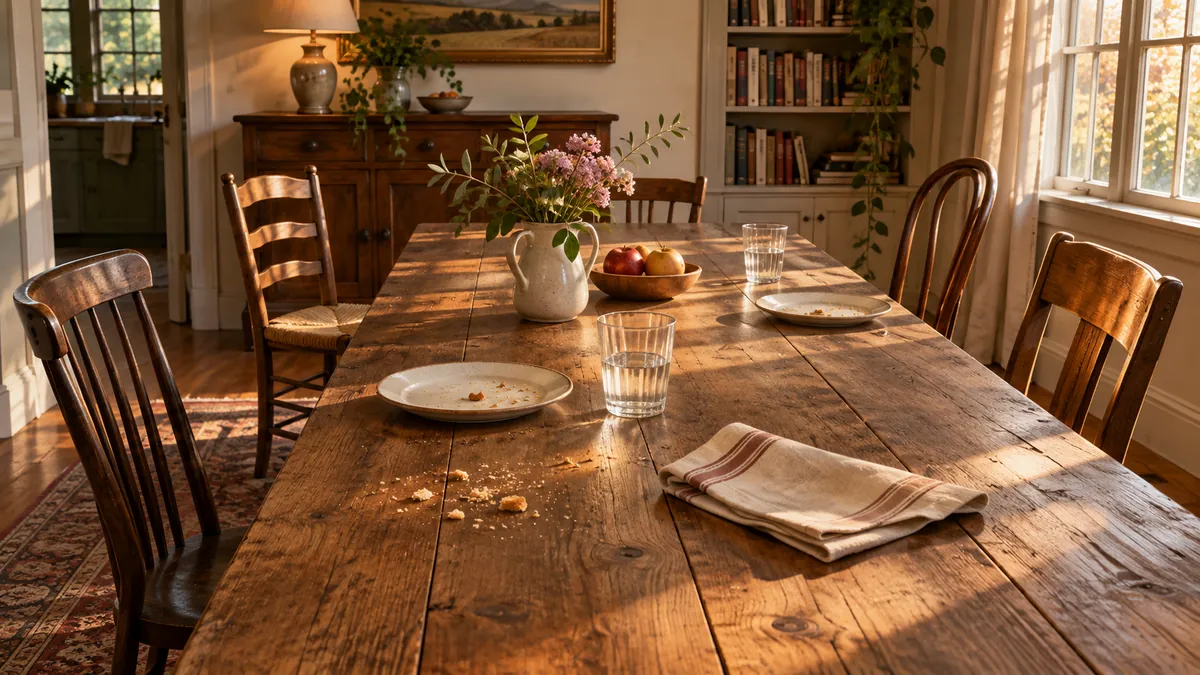
The table in the shop
A customer once ordered a solid table, two meters and forty long, with eight chairs to match. Three months later she wrote to ask whether we could make it shorter. The children had moved to other cities, and she and her husband had started eating at the kitchen counter because the big table felt like a waiting room. We did not shorten it. We sent two extra leaves back to her as a gift and suggested she do the opposite: invite the neighbors on Thursdays and fill it.
She wrote again in the spring. The Thursdays had stuck. What surprised her was not the company, which she had expected to enjoy, but how much more she remembered from week to week. Who had a grandchild on the way, whose knee was bothering them, the title of the book somebody had recommended. She had been writing nothing down. The table was doing it for her, because each Thursday someone asked how the thing from last week had turned out, and she had to reach back for it.
Why talk is heavier work than it looks
Following a conversation at a full table is one of the busier things a brain does in an ordinary day. You hold a name in mind while someone finishes a sentence, you notice that the person across from you wants to speak, you dig out the detail you heard a week ago, and you do it with noise from the kitchen and a fork in your hand. Researchers who study how people keep sharp in the second half of life have spent years looking at social contact, and a recurring picture in that work is that people who stay engaged with others tend to report steadier focus and an easier time with recall than people who spend most days alone. Nobody has shown that a dinner party is a treatment for anything, and we would not say so. What we can say, as people who build the furniture, is that the chairs were never meant to stay pushed in.
The habit, as we would set it
Pick one meal a week and guard it as stubbornly as you would a dentist booking. It does not need to be dinner and it does not need to be fancy; a Saturday breakfast with eggs works as well as a roast. Pull out more chairs than you think you need, and put the phones in another room, face down, where nobody can hear them buzz.
Ask at least one question that cannot be answered with a single word. Not whether the trip was good, but what the hotel room looked like when they opened the door. The answer forces the teller to rebuild a scene, and it forces you to keep the pieces in order while you listen. Next week, ask how it ended. That small return trip is the part that seems to matter most.
If you live alone, the table still counts. A standing call with a sister at the same hour, a card game at the community center, a volunteer shift where people know your name: the shape is the same. A fixed time, more than one voice, and a thread you pick up again seven days later.
A note from the bench
Chairs last longer when they are used. A chair that sits pushed in for years dries out at the joints and starts to creak the first time someone finally leans back in it. We are not going to stretch that comparison any further than it deserves, but nobody in the shop has missed it either.